1 device, 3 positions, 20 exercises
Menu

For pain patients

be2move for muscle tension and lack of movement: guided exercise, under supervision

If your doctor or therapist has recommended movement, be2move gives every exercise a set path. You train in everyday clothes, in short sessions and within the pain-free range: first in the practice under guidance, then at home.

20
guided exercises
3
Positions
6
exercises in everyday clothes
1 m²
floor space

be2move is a training device for preventing, maintaining and improving mobility. It guides 20 exercises along a set path so that you can repeat them safely and in the same way every day: in the physiotherapy practice under the guidance of therapists, then at home. Movement is part of many therapy plans, and that is what the device is built for. be2move is not a medical device, it does not diagnose, does not treat and promises no effect. Have new or acute complaints checked by a doctor.

Starting point

Why is movement part of many therapy plans?

Movement instead of rest: that is the advice many patients take home from the practice. Muscle tension, one-sided strain and lack of movement have one thing in common. The muscle stays at the same length until it takes that length for normal. The difficulty rarely lies in knowing, but in repeating.

1

Muscle tension

Muscles that stay in one posture for hours contract. Neck, shoulders and back are the typical body regions. How to stretch them along a guided path is explained in our guide articles on neck and trapezius and back stretching (German).

2

One-sided strain

Always the same hand on the mouse, always the same shoulder under the bag, always the same standing leg. Everyday life rarely loads the body symmetrically. With be2move you do every exercise on the left and on the right, and the device gives both sides the same path.

3

Lack of movement

Mobility decreases when it is not used. Long hours of sitting keep the hip flexors and hamstrings short. The way back leads through regular movement, not through a single big effort.

The principle

How does be2move guide the movement?

Each of the 20 exercises has a set path. You take hold of the rung or lie down on the lying surface, the device sets direction and travel, and you decide how far you go. What matters most for you: the exercise looks exactly the same today as tomorrow, and you cannot accidentally do it differently from the way it was shown in the practice.

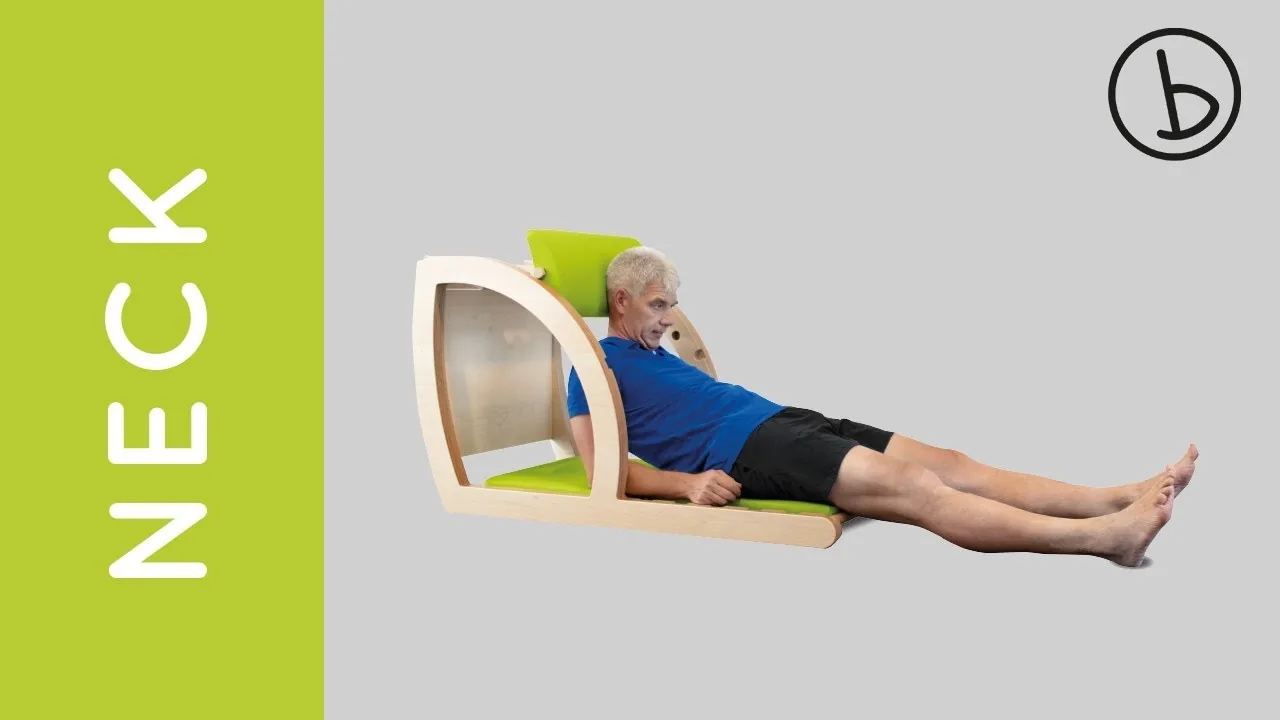
Instead of stretching the muscle passively, you move it along a guided path and strengthen it at the same time. That is called active muscle length training (German). There are exercises for the back, shoulders, neck, hips and thighs: six standing in everyday clothes, ten lying, plus the rocking position. Which exercise addresses which body region is shown on the exercise chart under Downloads, and every exercise with a photo is on the page The device.

be2move trapezius exercise standing in everyday clothes

The way

How does training work if you have complaints?

Three steps, and the first one does not take place on the device.

Get it checked

Have new or acute complaints checked by a doctor first. Whether guided mobility training is right for you now is decided by your doctor or therapist. Not by the device, not by this page.

Train under guidance

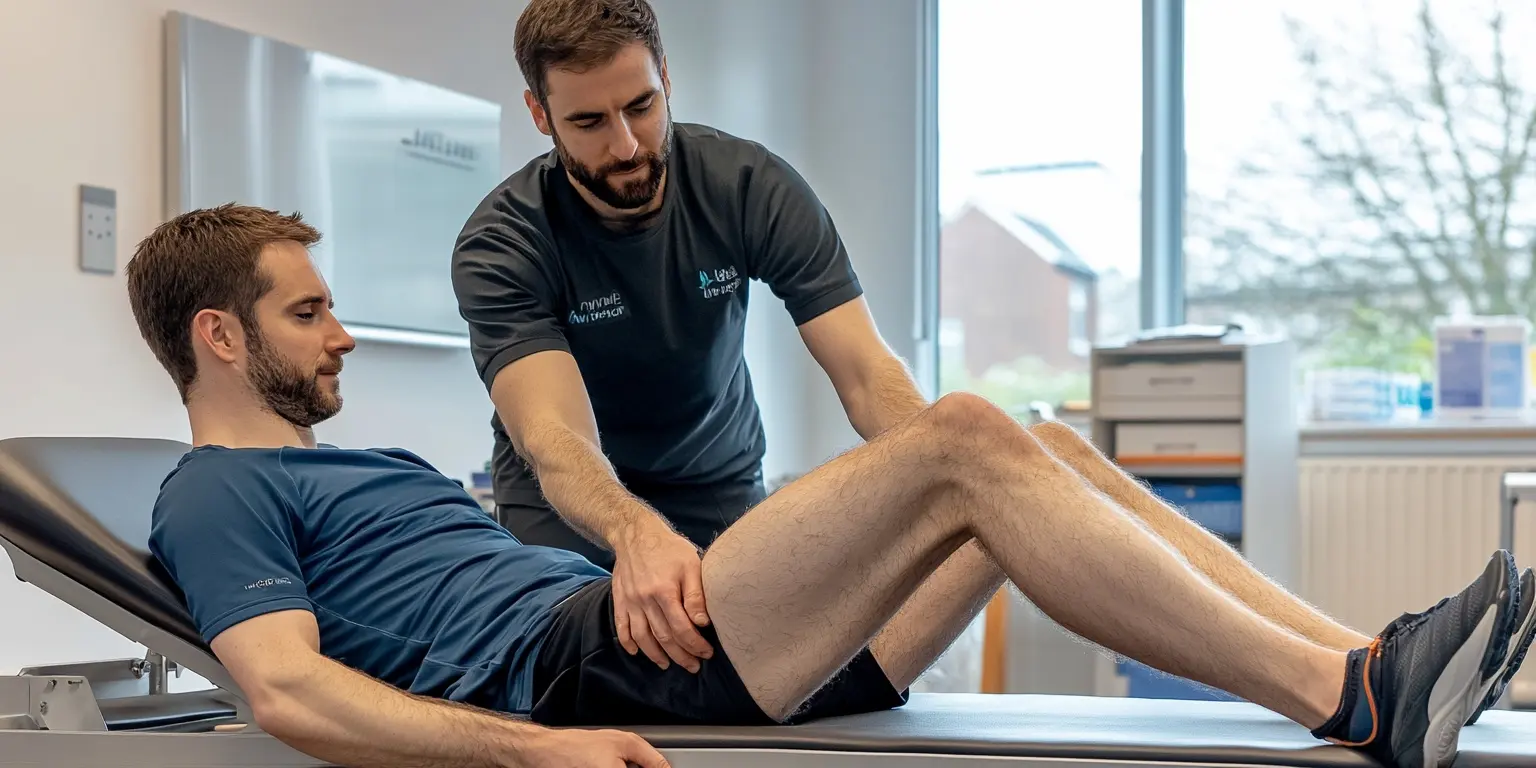
In physiotherapy practices and rehab centres be2move is used under the guidance of therapists. Your therapist selects the exercises for your body region, watches the execution and sets how far you go.

Continue at home

What you have learned under guidance, you repeat at home: the same device, the same path, the same exercises. The exercise chart and the exercise videos on YouTube remind you of the details. What that looks like in the living room is shown on the page For home use.

Training rules

Which rules apply when training with be2move?

These are general training rules and apply to any device. With be2move they are easy to keep, because the path is set and you only decide the range.

  • Within the pain-free range: never train against pain. You go as far as feels good, and not a centimetre further.
  • Short and daily: two exercises between two appointments count as a session. Regular repetition is the goal, not the long session at the weekend.
  • In everyday clothes: no changing, no mat, no excuse to put it off. Six standing exercises work in jeans.
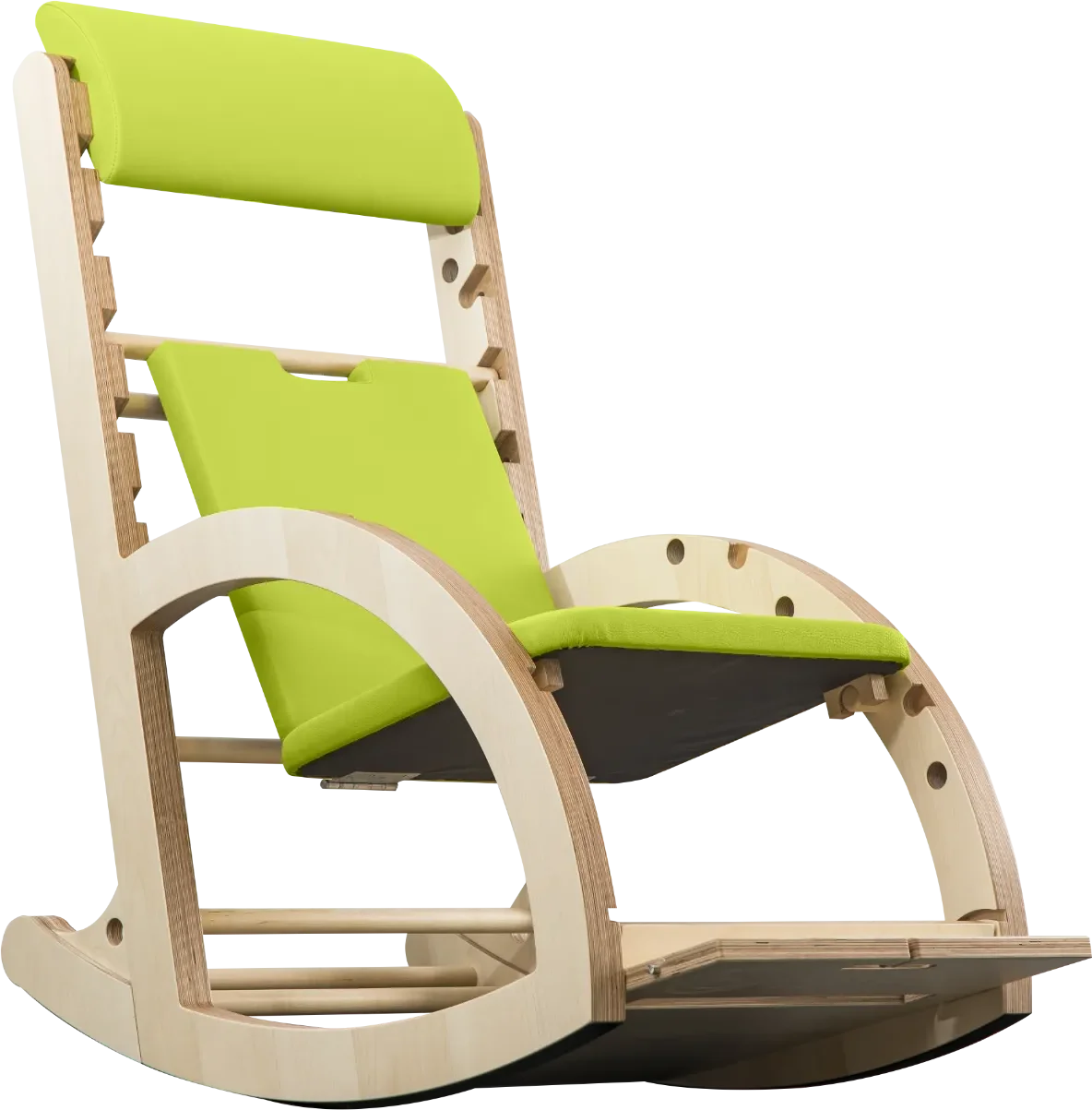
  • Rocking to relax: the rocking position is the way in and the way out. Sit down, rock, arrive, then train.
  • See a doctor if anything changes: if something gets stronger or something new appears, stop and have it checked.
be2move in the rocking position for relaxation

To be honest

Who is be2move not suitable for?

be2move is a training device according to EN ISO 20957-1 and not a medical device. It replaces neither diagnosis nor treatment. In these cases the device does not belong in your plan, at least not now:

  • With acute pain. Then a medical check is due, not training.
  • With fresh injuries, whichever body region is affected.
  • After operations without explicit clearance from your doctor or therapist.
  • In rehabilitation without a therapist. Here the rule applies without exception: under the guidance of therapists.
  • Outside 160 to 200 cm body height or above 120 kg, these are the limits of the standard.

If you want to build muscle mass or train endurance, be2move is the wrong device as well. It trains mobility and muscle length, nothing else.

Try it out

Where can you try be2move?

Best where someone is standing next to you: in a physiotherapy practice that works with be2move, or with us in Bad Waldsee, Germany. In a trial session you test the three positions and find out whether the guided path suits you. Ask at your practice, or write to us and we will arrange an appointment.

If you want the device at home later: the list price is 9,500 euros, list price incl. VAT, instruction included, delivery by arrangement. Alternatively leasing: around 180 euros per month, depending on term and leasing partner. All price details are on the device page.

Book a trial session

9,500 euroslist price incl. VAT, instruction included, delivery by arrangement
Leasing: around 180 euros per month
depending on term and leasing partner

Origin

Who developed be2move?

be2move was created in a physiotherapy practice in Bad Waldsee, Germany, out of daily work with patients who did not repeat their exercises at home because they lacked guidance. The developer treats patients himself and uses the device in his own practice.

  • Developed by a physiotherapist with over 30 years of experience together with experts in myoreflex therapy.
  • iENA silver medal 2025, International Trade Fair for Ideas, Inventions and New Products, Nuremberg.
  • Patent pending (DE 10 2021 122 682 A1). Training device according to EN ISO 20957-1.
be2move in the physiotherapy practice under the guidance of a therapist

Frequently asked questions

Is be2move a medical device?

No. be2move is a training device according to EN ISO 20957-1 for preventing, maintaining and improving mobility, deliberately not a medical device. It guides exercises along a set path, it does not diagnose, does not treat and promises no effect. In rehabilitation it is used under the guidance of therapists. Whether you should train on it is decided by your doctor or therapist.

Can I ease muscle tension with be2move?

The device does not promise that. Movement instead of rest is a principle many therapists give their patients. be2move makes sure that this movement has a set path and can be repeated in the same way every day, on the left as on the right. Whether that suits you and which exercises make sense is something you discuss with your therapist, not with a website.

What does training within the pain-free range mean?

In every exercise you go only as far as feels good, and never against pain. That is a general training rule that applies to any device. With be2move it is easy to keep, because the device sets the path and you only decide the range. If something gets stronger or something new appears, you stop and have it checked by a doctor.

Can I continue training at home after physiotherapy?

Yes, that is the idea behind it. What you have learned under guidance, you repeat at home on the same device with the same path. The exercise chart as a PDF and the exercise videos on YouTube remind you of the details. Short, daily repetitions in everyday clothes are the goal, not long sessions. With new complaints you go back to your doctor or therapist.

Where can I try be2move?

In a physiotherapy practice or rehab centre that works with be2move, or with us in Bad Waldsee, Germany. In a trial session you test all three positions: rocking, standing and lying. Ask at your practice or write to us via the contact form and we will arrange an appointment. A device for home costs 9,500 euros incl. VAT, leasing is available.

More places to use it

Experience be2move yourself

Book a trial session or request information material. We will get back to you promptly.