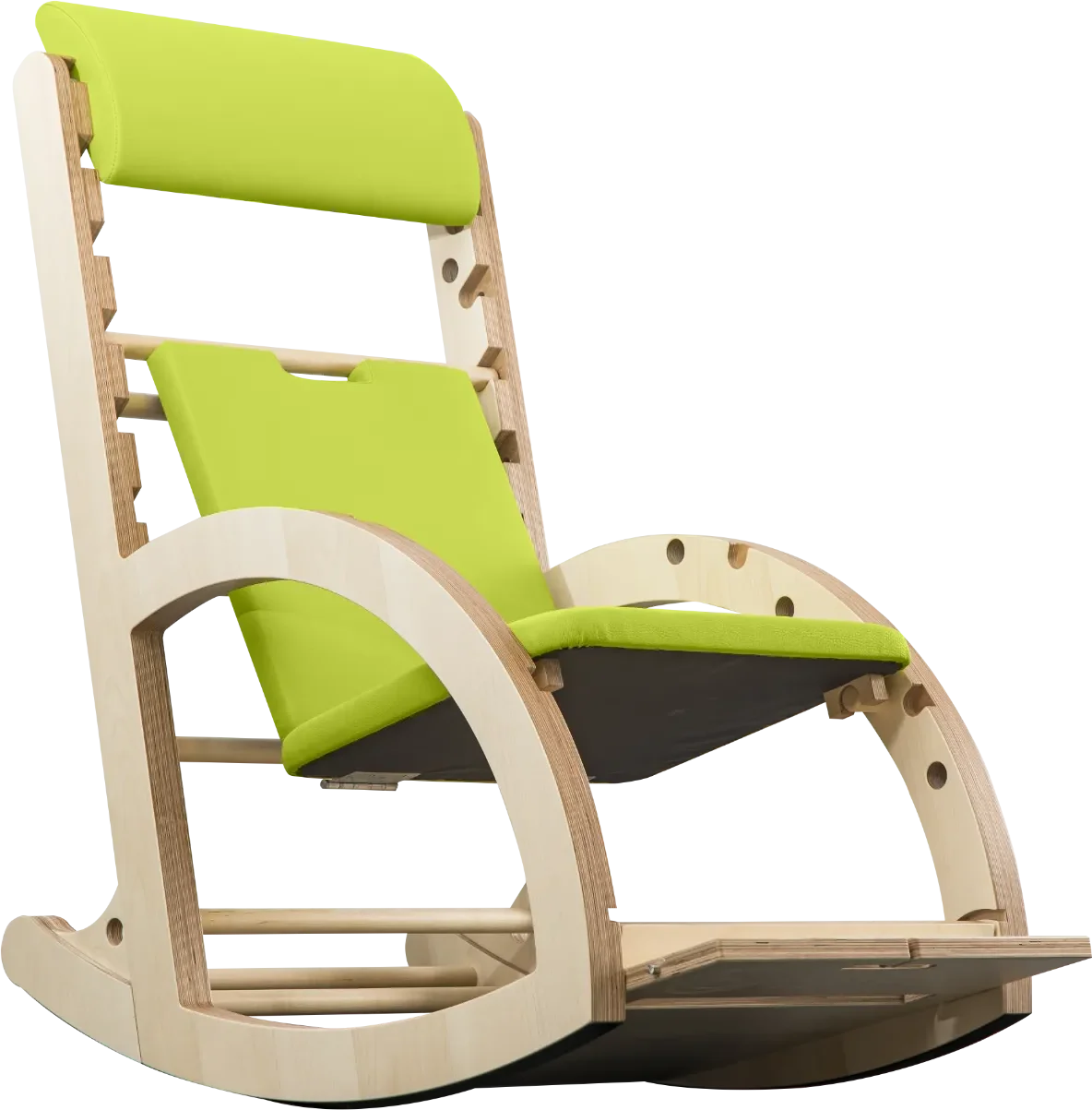
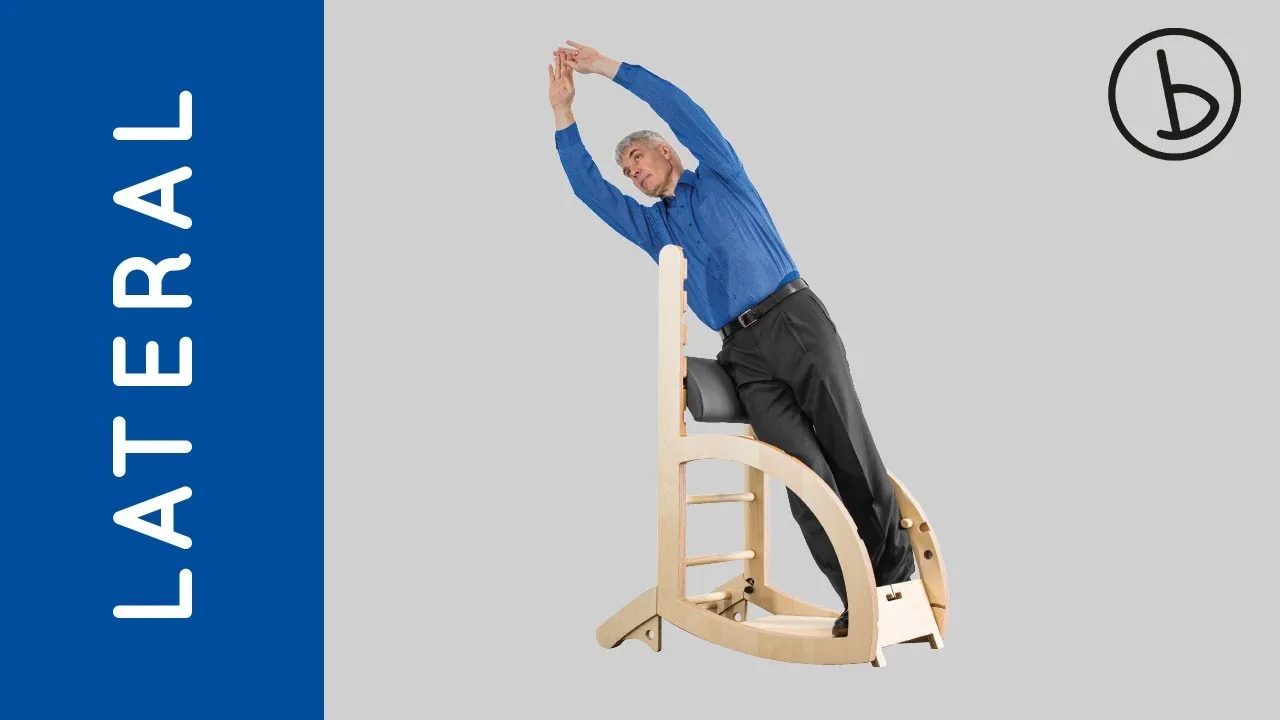
be2move is training furniture for mobility training over 50: 20 guided exercises for the back, shoulders, hips and legs on one square metre, in everyday clothes and without a gym. The device sets the path of the movement, you follow it at your own pace. be2move is not a strength or cardio machine and not a medical device, but a training device for preventing, maintaining and improving mobility.
Why does mobility become an issue after 50?
Muscle length and mobility only stay with you if you use them. If you have spent many years mostly sitting, in the office, in the car, on the sofa, you usually notice it first in the hip flexors and hamstrings: long periods of sitting shorten both. The rest follows quietly. You tie your shoes sitting down instead of standing, when reversing you would rather adjust the mirror than turn your head, and you get out of the car in two stages.
That is not a diagnosis, it is everyday life. And everyday life can be trained. The hip flexors are a good place to start, as you can read in our guide on stretching the hip flexors (German). What matters is not the one big session a week, but the short repetition you actually do.
How do you train with be2move without getting down on the floor?
be2move works with a guided movement path. You stand at the rung or lie down on the lying surface, and the device sets the direction in which the muscle lengthens. You decide how far. There is not much you can do wrong, because the path is fixed. The principle is called active muscle length training: the muscle is moved along a guided path and strengthened at the same time, instead of just being stretched passively. How exactly this works is explained in our guide on muscle length training (German).
In total there are 20 exercises in three positions: six standing in everyday clothes, ten lying, plus the rocking position. Each exercise belongs to one body region, from the neck through the chest and back to the hips and thighs. Which exercise belongs to which body region is shown on the exercise chart, which you can get as a PDF under Downloads. All exercises with photos are on the page The device, and if you prefer to watch, use the exercise videos on YouTube.